
Last Updated: 7 hours ago
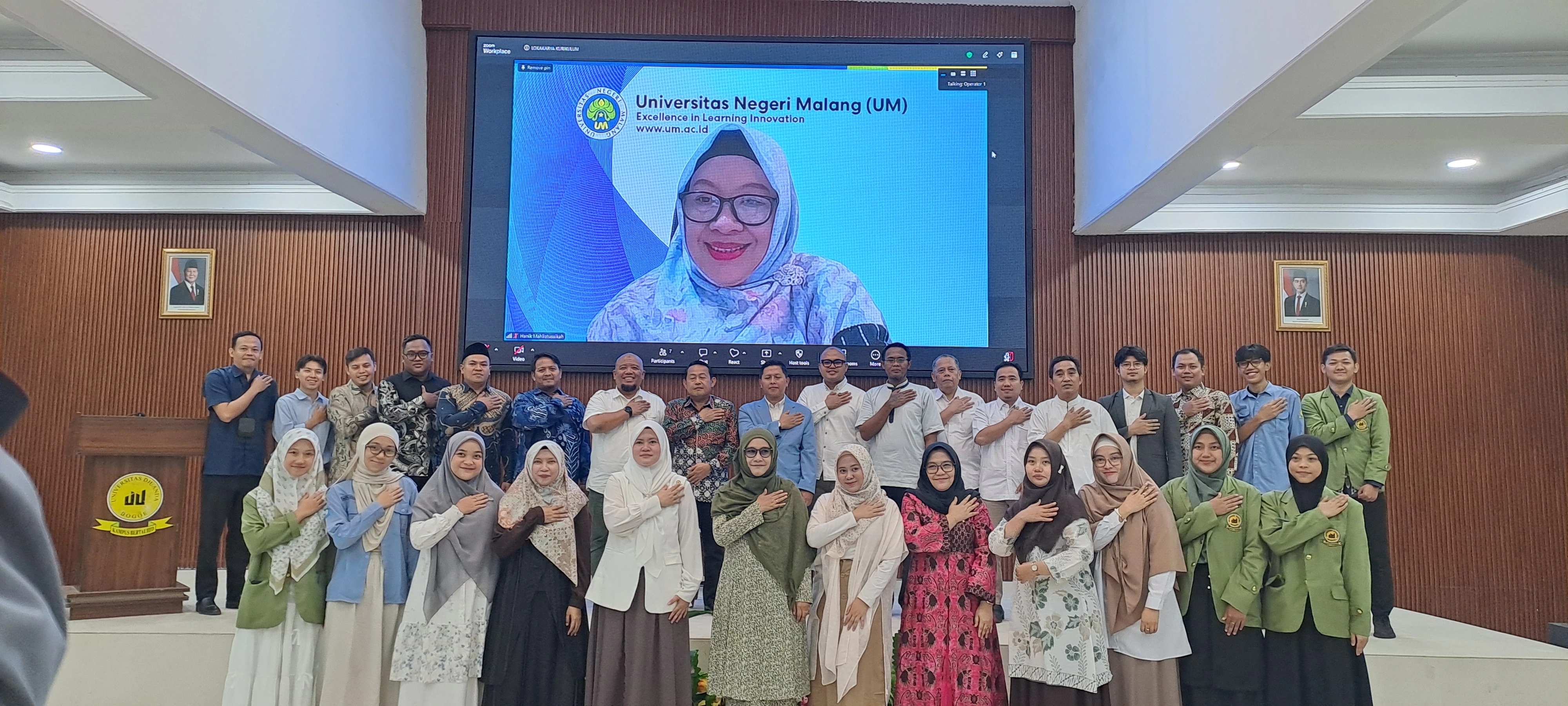
Bogor – The Faculty of Islamic Studies and Teacher Education (FAIPG) at Universitas Djuanda held a Curriculum Workshop on Tuesday (June 23, 2026). Conducted in a hybrid format at the C Building Hall of Universitas Djuanda and via Zoom Meeting, the event served as part of the faculty’s efforts to update the curricula of its four study programs in line with the latest higher education policies, labor market demands, and global developments.
The workshop involved four undergraduate study programs: Islamic Educational Management (MPI), Elementary School Teacher Education (PGSD), Arabic Language Education (PBA), and Islamic Religious Education (PAI).
The event was officially opened by the Vice Rector for Academic Affairs of Universitas Djuanda, Dr. Aal Lukmanul Hakim, S.H., M.H., who represented the Rector of Universitas Djuanda, Prof. Dr. Hj. R. Siti Pupu Fauziah, M.Pd.I. In his remarks, he emphasized that curricula must continuously evolve to respond to changes in educational policies, advancements in science and technology, and the ever-changing needs of society and the workforce.
The workshop featured Prof. Dr. Fahrurrozi, M.Pd., Chairman of the Indonesian Association of Elementary School Teacher Education Program Administrators, as the keynote speaker. In his presentation, Prof. Fahrurrozi discussed the direction of curriculum development based on Outcome-Based Education (OBE), which has become a fundamental framework in higher education.
According to him, an OBE-based curriculum places graduate learning outcomes at the center of the educational process, ensuring that all learning activities are designed to produce measurable and relevant competencies that meet stakeholder needs. He also outlined several recent policy developments, including the strengthening of Graduate Learning Outcomes (CPL), greater flexibility in final assignments, recognition of micro-credentials, expanded learning opportunities beyond students’ home study programs, and stronger collaboration with industry and professional sectors in curriculum development.
In addition to Prof. Fahrurrozi, the workshop also featured three distinguished education experts who participated online: Prof. Dr. Hanik Mahliatussikah, S.Ag., M.Hum., Head of the Undergraduate, Master's, and Doctoral Programs in Arabic Language Education at Universitas Negeri Malang; Prof. Dr. H. Badrudin, M.Ag., CEAM., Chairman of the Indonesian Association of Islamic Education Managers (Perma Pendis Indonesia); and Dr. H. Asep Nursobah, M.Ag., Head of the Master’s Program in Islamic Religious Education at UIN Sunan Gunung Djati Bandung.
The insights and recommendations provided by the speakers served as valuable input for the review and refinement of the curricula across the four study programs. Discussions highlighted the importance of aligning graduate profiles with stakeholder expectations, strengthening 21st-century competencies, and implementing curricula that support educational quality and graduate competitiveness.
The workshop was attended by the Dean of FAIPG Universitas Djuanda, Dr. Abdul Kholik, M.Pd.I.; the Vice Dean for Academic Affairs, Dr. Helmia Tasti Adri, M.Pd.Si.; and the Vice Dean for Non-Academic Affairs, Dr. H. Agung Muttaqien, M.Pd. Also in attendance were the heads of study programs: Dr. Syukri Indra, M.Pd.I. (Head of MPI), Dr. Wiworo Retnadi Rias Hayu, M.Pd. (Head of PGSD), Didin Syamsuddin, M.M.Pd. (Head of PBA), and Muhammad Kafnun Kafi, M.Pd. (Head of PAI), along with lecturers, laboratory heads, administrative staff, industry and institutional partners, alumni, and student representatives from all four study programs.
Dr. Abdul Kholik, M.Pd.I., Dean of FAIPG Universitas Djuanda, stated that the curriculum workshop represents an important step in ensuring that the faculty’s curricula continue to produce graduates who are competent, professional, and responsive to societal needs.
Through this workshop, FAIPG Universitas Djuanda reaffirmed its commitment to continuously enhancing educational quality through innovative, adaptive, and outcome-oriented curriculum development. This commitment aims to produce graduates who are competent, ethical, and globally competitive.