
Last Updated: 16 hours ago
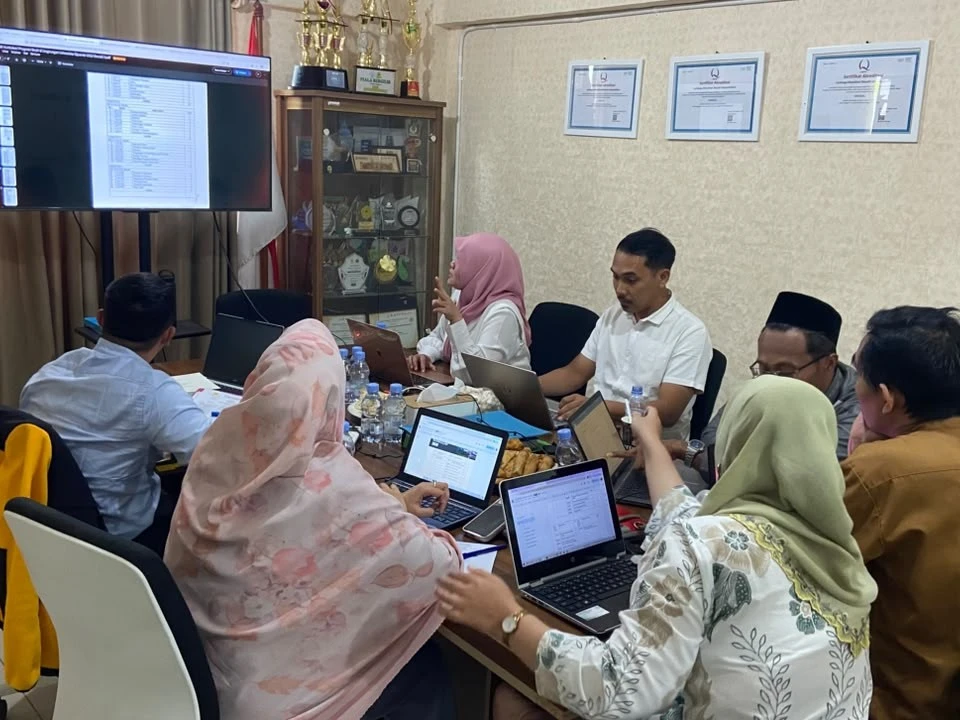
Bogor – The Faculty of Islamic Studies and Teacher Education (FAIPG) at Universitas Djuanda held a curriculum finalization meeting in the Meeting Room of Building G, Universitas Djuanda, on Monday (July 13, 2026). The meeting, which commenced at 10:00 a.m., marked the final stage in refining the curriculum documents before their implementation in the teaching and learning process across all study programs within the faculty.
The meeting was chaired by the Dean of FAIPG Universitas Djuanda, Dr. Abdul Kholik, M.Pd.I., and attended by the Vice Dean for Academic Affairs, Dr. Helmia Tasti Adri, S.Pd., M.Pd.Si. Also in attendance were Dr. Wiworo Retnadi Rias Hayu, M.Pd., Head of the Elementary School Teacher Education (PGSD) Study Program; Irwan Efendi, S.H., M.Pd., Secretary of the PGSD Study Program; Muhammad Kafnun Kafi, M.Pd., Head of the Islamic Religious Education (PAI) Study Program; Didin Syamsuddin, S.S., M.Pd., Head of the Arabic Language Education (PBA) Study Program; Dr. Novi Maryani, M.Pd.I., Head of the Laboratory of the Islamic Educational Management (MPI) Study Program; and Sandi Sanjaya, S.A.P., M.A.P., Head of the Administrative Office of FAIPG Universitas Djuanda.
The meeting focused on refining the curriculum documents of each study program. For the PGSD Study Program, discussions covered the integration and revision of several courses based on recommendations from the curriculum reviewer, adjustments to elective courses, the establishment of a total study load of 146 credit units (SKS), and the alignment of the course coding system while maintaining all faculty-wide compulsory courses.
Meanwhile, the Arabic Language Education (PBA) Study Program discussed the refinement of its graduate profiles by reducing them from four to three, aligning the Graduate Learning Outcomes (CPL), improving course nomenclature, and adjusting the course coding system to comply with the latest curriculum standards.
For the Islamic Religious Education (PAI) Study Program, discussions centered on redesigning the program's scientific vision by referring to several universities offering Islamic Religious Education programs. The meeting also agreed to change the graduate profile nomenclature from Consultant to Junior Researcher, refine the curriculum documents, and review the course coding system, including providing explanations for each course code used in the curriculum.
As a follow-up, each study program will revise its curriculum documents based on the meeting's outcomes. The revisions include graduate profiles, Graduate Learning Outcomes (CPL), curriculum structure, course nomenclature, and the course coding system. All revisions are targeted to be completed by Wednesday, after which the documents will undergo a final review before the curriculum is officially finalized.
Through this process, FAIPG Universitas Djuanda ensures that each study program develops curriculum documents aligned with national higher education standards, scientific advancements, and the competencies required of future graduates. The refined curriculum is expected to serve as a solid foundation for delivering a more relevant, adaptive, and high-quality learning experience.