
Last Updated: 1 month ago
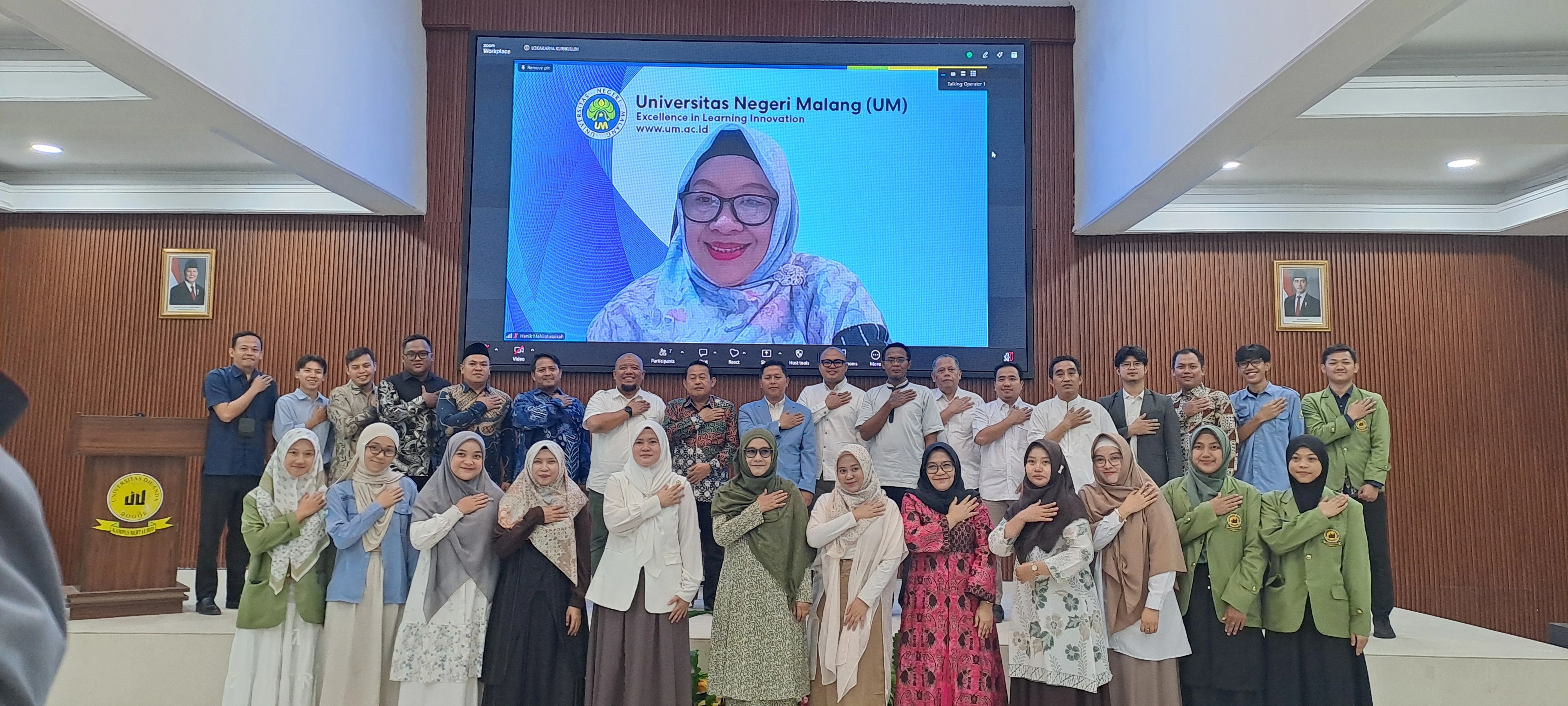
The Faculty of Islamic Studies and Teacher Education (FAIPG) of Universitas Djuanda (UNIDA) held the FAIPG UNIDA Curriculum Workshop on Tuesday, June 23, 2026, at the Hall of Building C, Universitas Djuanda. The event was attended by the First Vice Rector of UNIDA, Dr. Aal Lukmanul Hakim, S.H., M.H., the Dean of FAIPG UNIDA, Dr. Abdul Kholik, S.Pd.I., M.Pd.I., along with his staff, as well as members of the academic community, alumni, and students of FAIPG UNIDA.
The Chairperson of the Organizing Committee, Dr. Helmia Tasti Adri, M.Pd.Si., stated in her remarks that the workshop aimed to support the sustainability and development of all study programs within FAIPG.
“We will formulate curriculum development recommendations to support the sustainability of FAIPG across all study programs. Since the curriculum is the heart of the learning process, even a well-designed curriculum cannot be effectively implemented without stakeholder involvement and adequate facilities,” she stated.
Meanwhile, the Dean of FAIPG UNIDA, Dr. Abdul Kholik, S.Pd.I., M.Pd.I., highlighted the rapid changes occurring in the world of education.
“The educational landscape is changing rapidly. Technological advancements, digital transformation, artificial intelligence, labor market demands, impact-oriented higher education, as well as national and international accreditation standards, have transformed the way curricula are designed and implemented. This forum serves as an opportunity to transform and improve the curricula of study programs and the faculty within FAIPG, because the curriculum is a strategic instrument for shaping outstanding graduates with strong character,” he explained.
Furthermore, the First Vice Rector of UNIDA, Dr. Aal Lukmanul Hakim, S.H., M.H., expressed his hope that the curriculum development process would produce an adaptive and implementable curriculum capable of generating quality graduates.
“With the participation of resource persons, users, alumni, and students, we hope that the curriculum can be officially approved by August. We must not teach things that are no longer needed, nor fail to teach things that are critically needed. Our curriculum must be adaptive and implementable, enabling us to produce quality graduates with appropriate learning outcomes,” he explained.
The workshop continued with presentations delivered by curriculum experts and leaders of national professional organizations. The first presentation was delivered by Prof. Dr. Fahrurrozi, M.Pd., Chairman of the Association of Indonesian Elementary School Teacher Education Study Program Managers and Vice Rector for Research, Innovation, and Information Systems at Jakarta State University (UNJ). He discussed the direction of higher education curriculum development that is adaptive to advances in science, technology, and societal needs.
The next presentation was delivered by Prof. Dr. H. Badrudin, M.Ag., CEAM., Chairman of the Indonesian Association of Islamic Education Managers (PERMA PENDIS) and Head of the Doctoral Program in Islamic Education at Sunan Gunung Djati State Islamic University Bandung. He presented strategies for developing Islamic education curricula that are relevant to global challenges and the needs of the workforce and society.
The following presentation was delivered by Prof. Dr. Hanil Mahliatussikah, S.Ag., M.Hum., Chairwoman of the Association of Arabic Language Education Study Programs (PPBA), Professor, and Assessor in Arabic Language Education at Universitas Negeri Malang. In her presentation, she emphasized the importance of designing curricula that are oriented toward graduate learning outcomes, strengthening 21st-century competencies, and aligning with higher education quality standards.
The final speaker was Dr. H. Asep Nursobah, M.Ag., Head of the Master’s Program in Islamic Religious Education at Sunan Gunung Djati State Islamic University Bandung. He shared experiences and best practices in developing Outcome-Based Education (OBE) curricula, including strategies for curriculum implementation and evaluation to produce outstanding and competitive graduates.
Prior to the workshop, FAIPG Universitas Djuanda had undertaken a series of systematic and continuous curriculum development stages. The first stage involved evaluating the existing curricula in each study program. This evaluation aimed to identify strengths, weaknesses, challenges, and opportunities for curriculum improvement to ensure continued relevance to developments in science and technology, societal needs, and the ever-changing demands of the workforce.
The next stage involved conducting tracer studies and stakeholder needs analyses. Through these activities, each study program gathered input from alumni, graduate employers, partners, and other stakeholders to assess the relevance of graduate competencies to labor market needs. These activities also aimed to identify stakeholder expectations regarding the competencies required of future graduates.
Based on the results of the curriculum evaluation and stakeholder needs analysis, each study program prepared an initial curriculum draft covering Graduate Profiles, Program Educational Objectives (PEO), Graduate Learning Outcomes (CPL), fields of study, curriculum structure, and course designs that support the achievement of graduate competencies in accordance with the vision of the study program and the university.
To strengthen the quality of curriculum development, FAIPG also organized seminars and discussions with curriculum experts. These activities featured curriculum specialists who provided presentations, guidance, and recommendations regarding Outcome-Based Education (OBE) curriculum development, the implementation of National Higher Education Standards, the formulation of Program Educational Objectives (PEO) and Graduate Learning Outcomes (CPL), as well as various strategic issues in higher education that need to be accommodated within the curriculum.
Subsequently, the input obtained from curriculum evaluations, tracer studies, stakeholder needs analyses, and discussions with curriculum experts was utilized by each study program to refine the curriculum drafts that had been developed. This process aimed to ensure that the resulting curricula would be increasingly relevant, adaptive, and capable of addressing future challenges.
As the culmination of the entire series of activities, the Curriculum Workshop with stakeholders was conducted. During this forum, each study program presented and discussed its refined curriculum draft with graduate employers, alumni, school partners, professional organizations, representatives from the business and industrial sectors, and other relevant stakeholders.