
Last Updated: 1 year ago
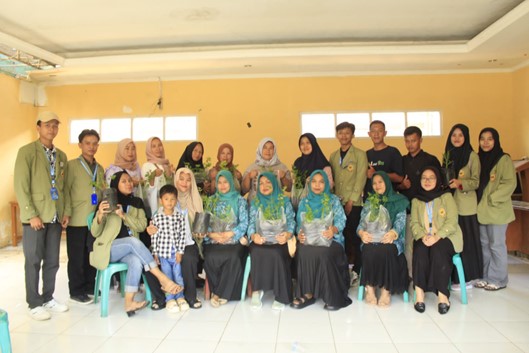
FAIPG KKN Students from Djuanda Bogor University from Group 20 held "Training on Planting Holicultural Vegetables in Home Yards” held at the Cibentang Village Hall, Gunung Guruh District, Sukabumi Regency. This training is designed to empower the community to use their home gardens to grow holicultural vegetables. As well as providing practical knowledge and skills in growing vegetables, even on limited land. The practitioner presented was Mang Kamal, and was also attended by housewives, house owners with limited land, and the general public. (07/08/2024)
Participants will learn basic techniques for choosing types of vegetables to grow in their home gardens, how to prepare efficient planting media, as well as tips for caring for plants so they can grow well and produce maximum harvests. Apart from that, this training also teaches how to make your own organic fertilizer, as well as how to deal with pests naturally without using dangerous chemicals.
This training aims to improve people's skills in growing holicultural vegetables in their home gardens, even with limited land. By learning practical and environmentally friendly farming techniques, participants are expected to be able to live a healthy lifestyle by consuming fresh vegetables they harvest themselves, while reducing household expenses. Apart from that, this training also educates participants about sustainable agriculture, including making organic fertilizer and managing natural pests, so that the use of yard land becomes more optimal and beneficial for the family and the surrounding environment.
It is hoped that this training can empower people to make optimal use of their home gardens in growing holicultural vegetables, so that they can provide a healthy and sustainable food source for their families. In addition, it is hoped that participants can reduce dependence on vegetables purchased from outside, which in turn can save household expenses. With the knowledge and skills acquired, participants are also expected to be able to implement environmentally friendly agricultural practices, contribute to the sustainability of the local ecosystem, and pass on this knowledge to their neighbors or communities around them, thereby creating a greener and healthier environment.