
Last Updated: 1 year ago
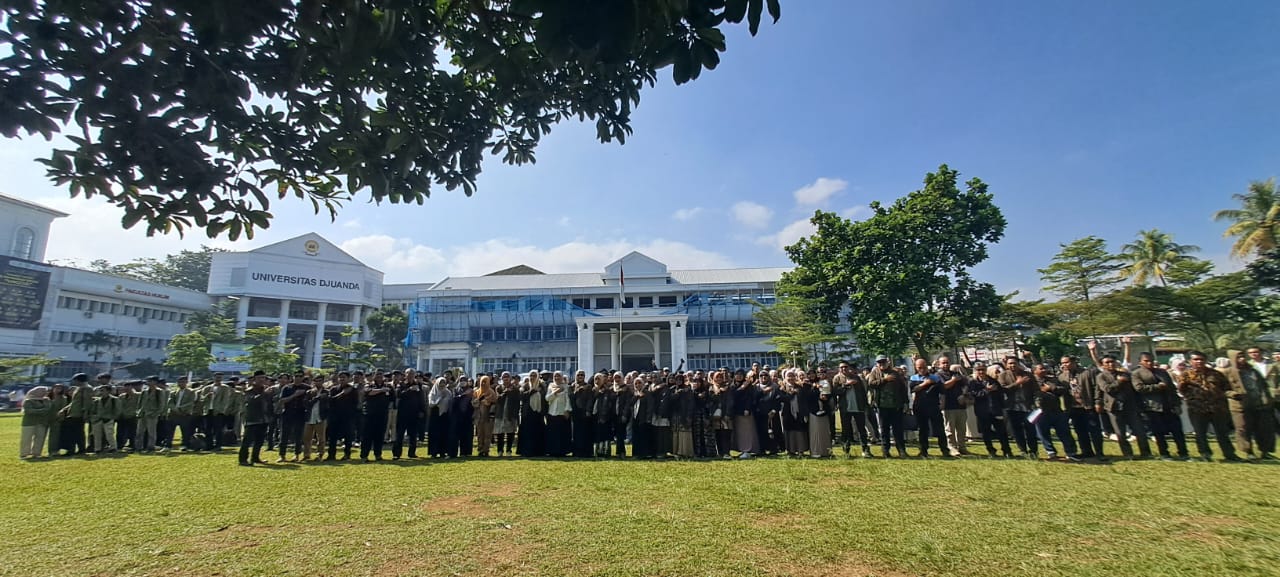
The Faculty of Islamic Religion and Teacher Education (FAIPG) of Djuanda University (UNIDA) held a graduation ceremony for the 2025 Community Service Program (KKN). This activity was carried out by 2 Faculties, namely the Faculty of Agriculture and the Faculty of Computer Science of Djuanda University (23/07/2025).
The Thematic Community Service Lecture (KKNT) held by FAI-PG Universitas Djuanda in 2025 is a Thematic Community Service Program carried out by students from all study programs at Universitas Djuanda including the Islamic Education Management Study Program (MPI), Elementary School Teacher Education (PGSD), Arabic Language Education (PBA), Sharia Economics (ESI) and Sharia Banking (PBS).
The activity began with the reading of the holy verses of the Koran, then continued with a speech from the Dean of FAIPG,Dr. Zahra Khusnul Lathifah, M.Pd.I., M.C.E.He emphasized the importance of the role of students in community service, especially in bringing the values of monotheism as a foundation for ethics and manners during KKN.
The next speech came from representatives of the deans of the Faculty of Agriculture (FAPERTA) and the Faculty of Computer Science (FILKOM), who also encouraged students to apply their knowledge in real life within the community.
Rector of Djuanda University,Dr. R. Hj. Siti Pupu Fauziah, M.Pd.I., providing guidance and motivation to all participants. He emphasized that KKN is a concrete manifestation of the practice of monotheistic values in social life, and this momentum should be utilized to make the best possible contribution to village progress.
As a symbol of release, ribbon cutting by the Chancellor, which marks the official start of the Community Service Program (KKN). Students will travel to various regions with the primary mission of empowering communities, increasing educational and technological literacy, and strengthening local economies based on village wisdom.
Through this program, students can become drivers of change who are not only intellectually intelligent, but also have strong characters based on Islamic values.