
Last Updated: 5 months ago
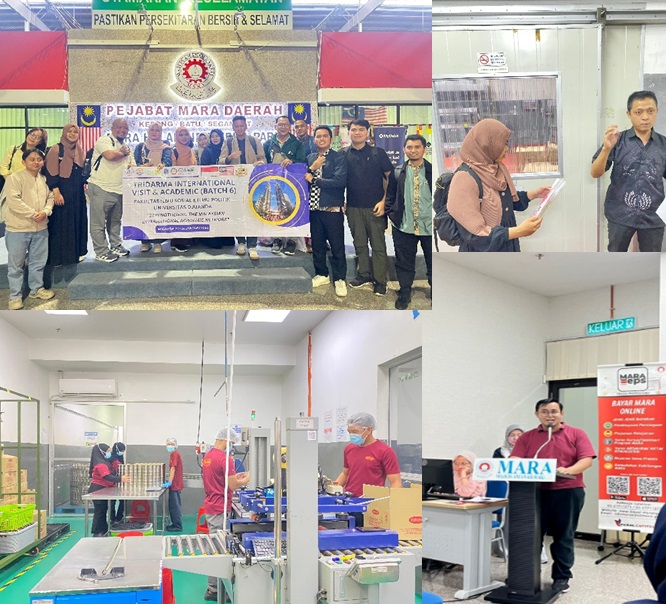
Kuala Lumpur – January 27, 2026 The Sharia Banking Study Program, Faculty of Islamic Studies and Teacher Education (FAIPG), Universitas Djuanda, carried out an educational visit to the MARA Food Technology Incubator (INTEM), located at the KIP Industrial Park, Kepong, Federal Territory of Kuala Lumpur. This activity aimed to broaden insight into the halal industry, particularly in the areas of food technology, product innovation, and the development of sharia-based entrepreneurship.
The visit formed part of strengthening contextual learning, enabling students not only to understand the concept of the halal industry theoretically, but also to directly observe industrial management practices, business incubation processes, and the application of technology in producing high-quality food products that comply with halal standards.
According to Maya Apriyana, M.E., as a representative of the study program’s lecturer delegation, INTEM MARA is a highly strategic venue for interdisciplinary learning, as it showcases not only aspects of food technology but also business management, entrepreneurship, and the strengthening of the halal industry ecosystem.
This activity also supports the achievement of Higher Education Key Performance Indicators (IKU), particularly those related to lecturers’ off-campus activities and study program partnerships, while opening opportunities for international collaboration in research and community service in the fields of the halal industry and Islamic finance.
During the visit, INTEM MARA representatives delivered presentations on the roles and functions of the incubator, mentoring processes, and product development strategies to ensure competitiveness in both local and global markets. The delegation from the Sharia Banking Study Program was also invited to directly observe production facilities, laboratories, and examples of innovative products that have been successfully commercialized.
Through this visit, the Sharia Banking Study Program of FAIPG Universitas Djuanda hopes to strengthen its academic contribution to the development of a global halal industry that is inclusive, sustainable, and grounded in sharia values.