
Last Updated: 2 years ago
The obligation to provide inclusive education is not only the government's responsibility. But also universities that produce inclusive teacher candidates who contribute to the success of implementing inclusive education in elementary schools. The collaboration and relationship between the University and schools is a continuation of the inclusive teacher candidate development program so that they have quality competencies through quality training programs.
This then underlies the Service Team of the Elementary School Teacher Education Study Program (PGSD) of the Faculty of Islamic Religion and Teacher Education (FAIPG) of Djuanda University (UNIDA) to carry out Inclusive Elementary School mentoring activities with the University-School Collaborative Partnership (USCP) Approach.
Dr Rasmitadila, M.Pd, the Head of the Community Service Team, said in its implementation there are still many elementary schools that have not become inclusive schools but accept students with special needs; as well as an inclusive school model, it is challenging to implement inclusive education by government policies.
Dr. Rasmitadila, M.Pd said the results of preliminary studies and previous research showed there are several problems regarding the implementation of inclusive education in elementary schools, namely not getting assistance from the government in implementing inclusive education programs, teachers rarely getting training that can improve competence as inclusive teachers even though the background of teachers from teacher education universities.
Then, the school does not collaborate with other parties, either with universities, NGOs, or psychologists, in supporting the implementation of inclusive education, so; the school feels that all obligations of inclusive education are only imposed on the school itself, then there is also a gap between theory and practice obtained by prospective inclusive teachers at universities when they have to teach in inclusive elementary schools, schools do not have facilities and infrastructure, as well as the availability of units that can assist teachers in solving problems in inclusive classrooms, both related to curriculum, student behaviour and assessment.
In its implementation, the PGSD FAIPG UNIDA Service Team collaborated with PGSD Universitas Pendidikan Ganesha (UNDIKSHA), Bali. The activity will be held on August 9, 2023, located at the PGSD building, FKIP Undiksha, Singaraja, Bali, with three elementary schools targeted for assistance, namely SDN 2 Banjarbali, SDN Banyuning, and SDN 1 Baktiseraga.
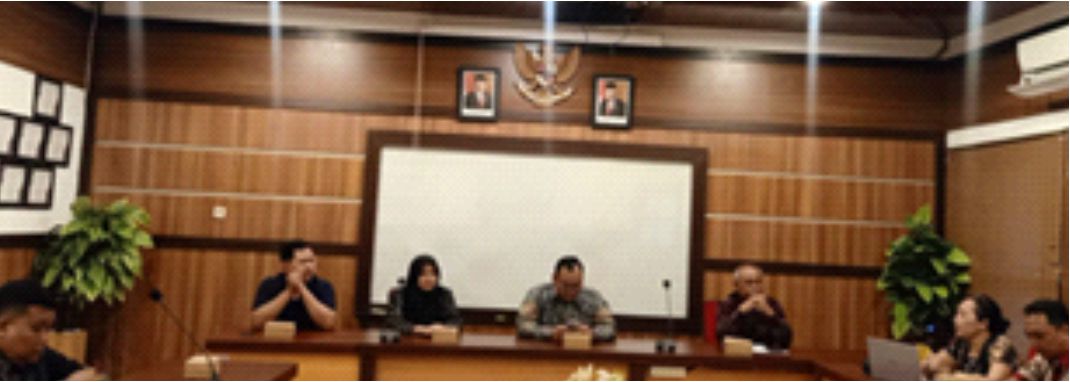
On August 9, 2023, at 08.00, the event was opened by remarks by the Dean of FKIP Undiksha and provided insight to teachers about the importance of inclusive education in elementary schools. Furthermore, the provision of material by Dr. Rasmitadila, M.Pd., in the subject matter is in the form of identification of students with special needs.
In the initial activity, the material was in the form of an explanation of the characteristics of ABK students and continued about the identification format, as well as an explanation of each identification instrument that the teacher must understand to identify students who tend to have special needs (ABK).
After giving the material, the event continued with discussion and question and answer with the teachers. Teachers ask a lot about handling students, student behaviour that must be taken properly and the relationship between students and family parenting that influences children's mental and behaviour.
The activity then continued with the introduction and use of props in the form of game cards for Dyslexic students so that teachers could practice it in class and understand how to deal with dyslexic students. The game activities are fun and meaningful so that teachers understand how to deal with Dyslexic students.
"With assistance to Inclusive Elementary School teachers, it is hoped that they can implement the material that has been provided so that they can handle students with special needs, and design learning according to student characteristics. In addition, this assistance can continue to be carried out by the two universities in the future to inclusive elementary schools so that the quality of inclusive elementary schools can continue to be improved," said Dr. Rasmitadila, M.Pd.