
Last Updated: 5 days ago
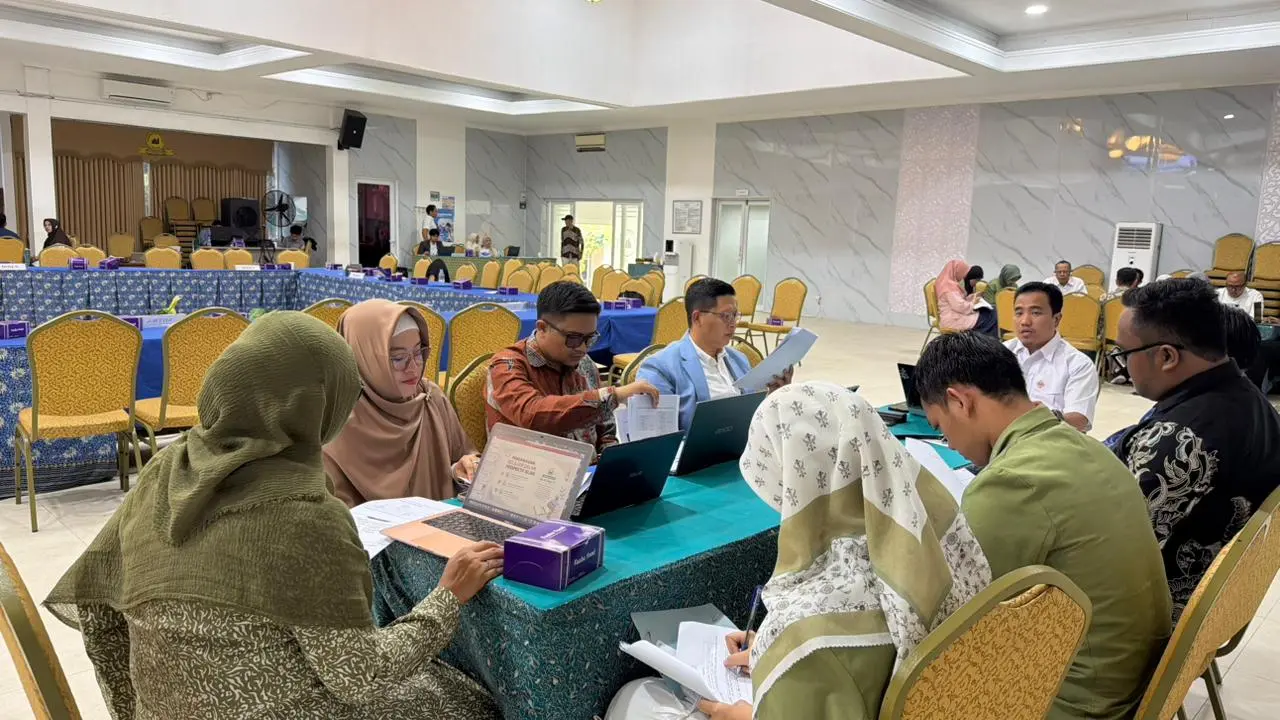
The Islamic Education Management (MPI) Study Program of Djuanda University took an active role in the Curriculum Workshop organized by the Faculty of Islamic Studies and Teacher Education (FAIPG) on Tuesday, June 23, 2026. Conducted in a hybrid format through Zoom Meeting and an offline session at the Hall of Building C, Djuanda University, the event provided an important platform for the MPI Study Program to strengthen the direction of its curriculum development in response to the evolving landscape of education and future challenges.
During the MPI Study Program discussion session, Prof. Dr. H. Badrudin, M.Ag., CEAM., Chairman of the Indonesian Association of Islamic Education Managers (PERMA PENDIS) and Head of the Doctoral Program in Islamic Education at Sunan Gunung Djati State Islamic University Bandung, participated as the keynote speaker through Zoom Meeting. In his presentation, Prof. Badrudin shared strategic perspectives on the development of the Islamic Education Management curriculum to ensure its relevance to labor market demands, technological advancements, and the challenges faced by educational institutions in the era of digital transformation.
The curriculum discussion involved various stakeholders, including study program administrators, lecturers, partners, alumni, and students. Among those attending the forum were Dr. Syukri Indra, M.Pd.I., Head of the MPI Study Program; Novi Maryani, M.Pd.I., Head of the MPI Laboratory; MPI lecturers Dr. Zahra Khusnul Lathifah, M.Pd.I. and Dr. Muhammad Rendi Ramdhani, M.Pd.; partner representative Maman Abdurahman, M.Pd.; alumni representatives Ibnu Syuhada, S.Pd. and Asep Kusnadi, S.Pd.I., M.Pd.I.; as well as MPI students Muhamad Yusuf Iskandar and Windy Nur Dwi Maharani.
The forum focused on refining graduate profiles, graduate learning outcomes (CPL), and strengthening competencies in the fields of Islamic educational institution management, educational administration, educational leadership, education and training management, as well as the utilization of digital technology and artificial intelligence in educational governance.
By involving professional organizations, partners, alumni, and students, the MPI Study Program seeks to ensure that the curriculum not only complies with academic standards and higher education regulations but also remains aligned with societal needs and the continuously evolving demands of the workforce.
Through this forum, the MPI Study Program of Djuanda University reaffirmed its commitment to developing a curriculum that not only responds to higher education policies but is also adaptive to societal changes and the ongoing transformation of Islamic education in the digital era.