
Last Updated: 6 days ago
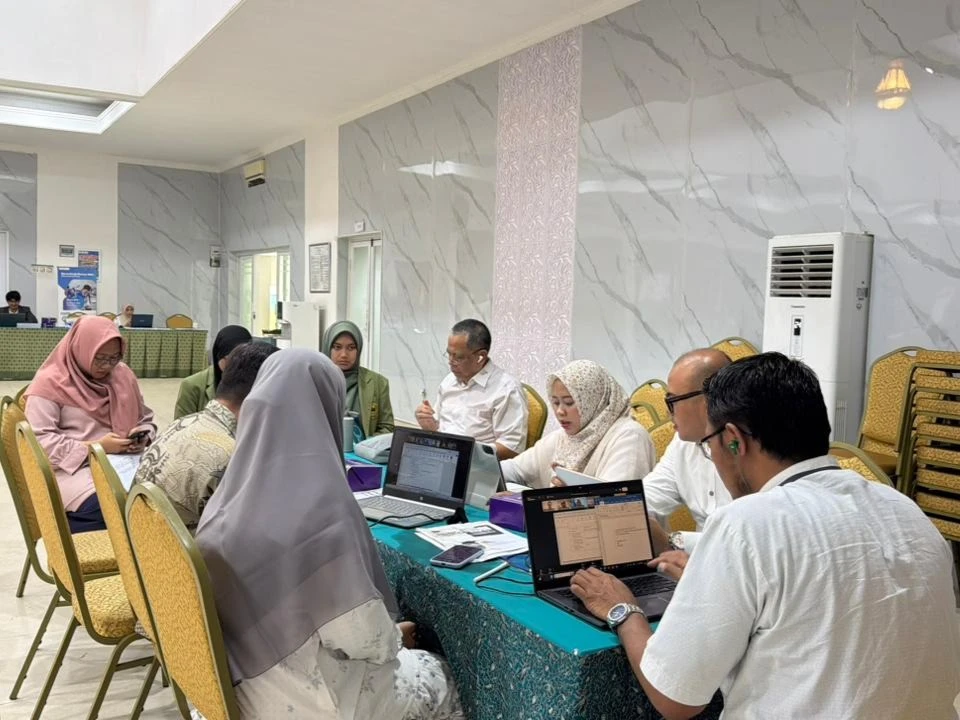
Bogor – The Arabic Language Education (PBA) Study Program of the Faculty of Islamic Studies and Teacher Education (FAIPG), Djuanda University (UNIDA), continues to refine the development of its 2026 Curriculum through the FAIPG Curriculum Workshop held on Tuesday (June 23, 2026). Conducted in a hybrid format via Zoom Meeting and at the UNIDA Building C Hall, the workshop served as a platform for the study program to gather valuable input from experts, partners, alumni, lecturers, and students.
During the Arabic Language Education Study Program discussion session, Prof. Dr. Hanik Mahliatussikah, S.Ag., M.Hum., Chairperson of the Association of Arabic Language Education Study Programs (PPPBA), Professor, and Assessor in the field of Arabic Language Education at Malang State University, participated as the keynote resource person. Joining via Zoom Meeting, Prof. Hanik shared insights and recommendations regarding curriculum development that is responsive to academic advancements, stakeholder needs, and the challenges of Arabic language education in the digital era.
The discussion was also attended by the Vice Dean for Non-Academic Affairs of FAIPG, Dr. H. Agung Muttaqien, M.Pd., Head of the PBA Study Program Didin Syamsudin, S.Pd., M.M.Pd., Head of the PBA Laboratory Siti Khumairotuzzahra, M.Pd., representatives of PBA partners, alumni, lecturers, and students. The involvement of these stakeholders played a significant role in evaluating and refining the curriculum to ensure its relevance to the needs of both the education sector and the professional world.
Throughout the forum, participants reviewed alumni tracer study results, evaluations of the previous curriculum implementation, graduate profiles, Graduate Learning Outcomes (CPL), and the course structure proposed for the 2026 PBA Curriculum. Various recommendations highlighted the importance of strengthening Arabic language competencies, increasing the proportion of practical learning experiences, integrating technology into education, and developing skills that align with societal needs and professional demands.
The curriculum development process is also aimed at strengthening graduate profiles as Arabic language educators, translators, researchers, and entrepreneurs in the field of Arabic language studies. These objectives are pursued through the refinement of learning outcomes, the enhancement of 21st-century competencies, and the integration of digital literacy into the learning process.
According to Didin Syamsudin, S.Pd., M.M.Pd., Head of the PBA Study Program, curriculum enhancement is a strategic effort to ensure that graduates possess competencies that remain relevant to contemporary developments while preserving the academic identity of the study program. In addition to strengthening academic and professional competencies, the 2026 PBA Curriculum continues to uphold the distinctive character of the program by integrating Arabic language mastery, educational sciences, and tauhid (Islamic monotheistic) values as the foundation for graduate development.
Through this workshop, the Arabic Language Education Study Program of FAIPG, Djuanda University, expects to produce a curriculum that is more responsive to societal needs, adaptable to developments in science and technology, and capable of producing graduates who are excellent, competitive, and well-prepared to contribute at both the national and international levels.